Smart Speakers for Bilingual Households
Hands-free control in multiple languages. Learn which speakers handle Estonian and English seamlessly for coordinating household tasks.

Why Language Matters for Your Home
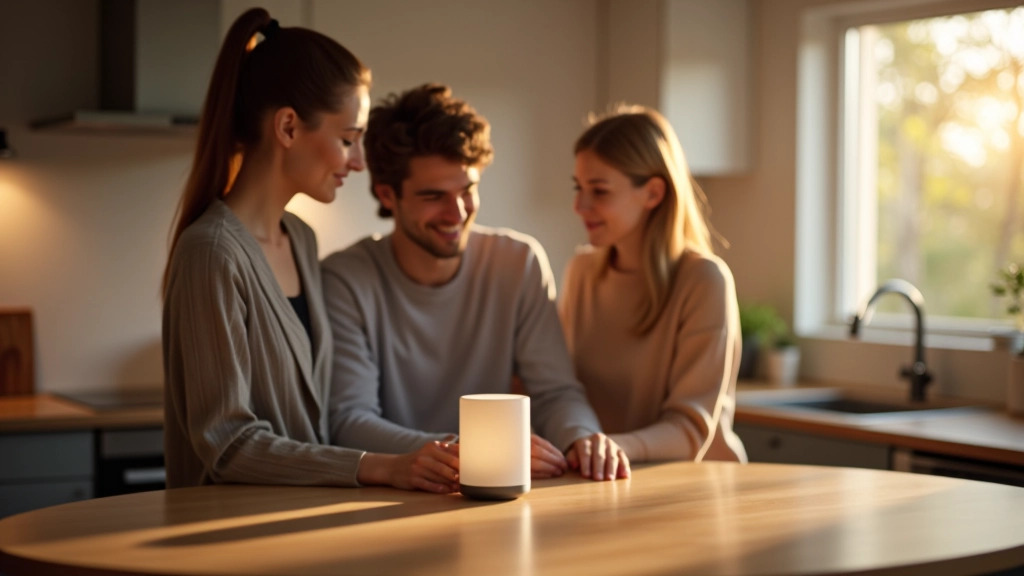
Most Estonian families live in two languages. Parents might speak Estonian at home, kids learn English at school, and grandparents prefer their native tongue. It's not just about comfort — it's about who actually uses the speaker.
A speaker that only understands one language becomes useless the moment someone else in the household needs to use it. You're essentially buying a device that only one person can talk to. That's the real problem we're solving here.
Here's what happens in real homes: You set up a speaker for yourself. It works great for you. Then your partner tries to use it and it doesn't understand them. Or your teenager wants to play music in English but the speaker keeps responding in the wrong language. Frustration builds. The speaker ends up collecting dust on a shelf.
What to Look For in a Bilingual Speaker
Not all speakers handle multiple languages equally. These are the features that actually matter.
Simultaneous Language Detection
The speaker should recognize which language you're speaking without being told. No switching modes. No saying "Alexa, speak English" first. Just talk and it understands.
Native Accent Support
Estonian-accented English is different from British English. A good speaker understands both. It doesn't get confused when you mix words or speak with a regional accent.
Flexible Settings
You should be able to set different languages for different users. One person's voice is recognized as Estonian, another's as English. The speaker learns and adapts.
Localized Content
Weather reports in Estonian. News from Estonian sources. The speaker should know where you live and serve content accordingly, even when switching languages.
Accuracy in Both Languages
Some speakers are brilliant in English but terrible at Estonian. You need equal performance in both. That means consistent understanding rates and response quality.
Local Processing Option
Privacy matters. The best speakers can handle some language processing locally without sending everything to the cloud. Check if your device has this capability.
Setting Up Multiple Languages Properly
Installation is usually straightforward. You'll open the app, go to settings, and add both languages. But here's where most people go wrong — they stop there.
Set primary and secondary language in the app. Don't just pick Estonian — you need both enabled.
Create separate user profiles for each person in your household. The speaker learns whose voice is whose.
Test commands in both languages right away. Play music, ask for weather, set reminders — all in both languages.
Adjust the language preference per device if you have multiple speakers. Kitchen might be mostly English, bedroom might be Estonian.
The real trick is testing early. You'll discover pretty quickly if the speaker struggles with Estonian pronunciation or English accents. If it does, you've got a return window.
Real Household Use Cases
Here's what actually happens when you get this right.
Morning routine. Dad asks "Alexa, mis on ilm?" (What's the weather?) in Estonian. Five seconds later, his daughter asks "Alexa, what's the weather?" in English. Same speaker, different voices, different languages. Both get accurate responses. No confusion. No switching modes.
Evening cooking. Mom's following a recipe in English and wants a timer. She says "Alexa, set a 20-minute timer." Her partner needs a reminder in Estonian and says "Alexa, sea meeldetuletaja kell kolmeks." Both work instantly. The speaker handles it without anyone having to manage language settings.
Kids doing homework. They're learning English at school but need to ask about Estonian grammar. They switch between languages mid-conversation with the speaker. "Alexa, how do you spell kaunis in English? Actually, what's the English word for kaunis?" The speaker keeps up.
The sweet spot: You're not thinking about language at all. Everyone just talks naturally, and the speaker gets it right. That's the goal.

Common Mistakes to Avoid
Assuming All Speakers Are the Same
They're not. Some handle bilingual households beautifully. Others struggle. Research before buying. Check user reviews specifically about language switching.
Not Setting Up User Profiles
The speaker learns faster when it knows who's talking. Create profiles for each household member. It improves accuracy significantly.
Expecting Perfect Accuracy Immediately
It takes a few weeks. The speaker learns your accents, your speech patterns, your household's unique mix of languages. Give it time.
Placing It in Noisy Areas
Bilingual processing is harder. Background noise makes it worse. Keep the speaker in a relatively quiet spot — kitchen counter, bedroom nightstand, not next to the washing machine.
Making the Right Choice
A smart speaker for a bilingual household isn't just about features. It's about whether your family will actually use it together. If everyone has to speak their own language, or if it keeps mixing things up, you've basically bought an expensive paperweight.
The good news? There are solid options that handle Estonian and English smoothly. They're not special or exotic. They're just normal speakers made by major companies that happen to work well with multiple languages.
Spend 15 minutes reading reviews from other bilingual users. Look for mentions of language switching, accent recognition, and accuracy. Watch a few YouTube videos of the speaker in action. Then order one with a clear return policy so you can test it at home with your family.
That's really all there is to it. Get something that works in both your languages, set it up properly, and let everyone try it. You'll know pretty quickly if it's the right fit.
Important Disclaimer
This article is informational and educational in nature. It reflects general guidance about smart speakers and bilingual household setups based on common use cases and publicly available information. Individual experiences may vary significantly depending on specific device models, language variants, household internet quality, and user preferences. We recommend testing any device in your own home environment before making a final purchasing decision. Manufacturer specifications and capabilities change regularly, so always verify current features with the official product documentation or retailer before purchase.